 08045816118


 Send Inquiry
Endoscope Fiber Optic Cable
Price 6000 INR/ Piece
MOQ : 1 Piece
Endoscope Fiber Optic Cable Specification
- Color Code
- Blue
- Automation Grade
- Semi Automatic
- Use
- Medical
- Material
- Plastic
- Function
- Medical Equipment
- Application
- Medical Use
- Product Type
- Endoscope Fiber Optic Cable
- Suitable For
- Clinic,Hospital
Endoscope Fiber Optic Cable Trade Information
- Minimum Order Quantity
- 1 Piece
- Supply Ability
- 10 Pieces Per Week
- Delivery Time
- 7 Days
About Endoscope Fiber Optic Cable
Innovatively designed Endoscope Fiber Optic Cable is designed as a flexible fiber optic bundle that comes along with an eyepiece. It has the ability to examine small objects and can reach every part of human body. It has become an evolutionary product that is used for assisting the physicians to perform their surgical procedures with ease. Thus, this cable is idealized to offer flexible endoscopic lighting applications and provide solution to meet the requirements of our clients. We are offering Endoscope Fiber optic Cable in the market at best leading price.
Features:
- Brilliant image quality
- Ease of use
- Fast examination
Endoscope Fiber Optic Cable
| Endoscope Fiber Optic Cable | Model | Inner Diameter (mm) | Length (mm) | Outer Diameter (mm) | Sheath |
| Silicon cable | 7694 | 4 | 1800 | 4 | Silicon |
| Silicon cable | 7694 | 4 | 2000 | 4 | Silicon |
| Silicon cable | 7694 | 4 | 2500 | 4 | Silicon |
| Silicon cable | 7694 | 4 | 3000 | 4 | Silicon |
Efficient Optical Transmission
The Endoscope Fiber Optic Cable delivers excellent light transmission, essential for clear visualization during endoscopic procedures. Its advanced plastic construction ensures durability while minimizing signal loss, making it an essential tool for both clinics and hospitals. The blue color coding aids in quick identification and correct assembly in operating environments.
Compatibility and Versatility
Designed to integrate seamlessly into existing medical equipment, this cable serves as a versatile connector between endoscopes and light sources. Suitable for a wide range of endoscopic systems, it streamlines clinical workflow, reducing downtime and maintaining optimal performance during medical examinations and minimally invasive surgeries.
FAQ's of Endoscope Fiber Optic Cable:
Q: How is the Endoscope Fiber Optic Cable used in medical settings?
A: The cable is connected between an endoscope and a compatible light source, transmitting illumination needed for visualizing internal organs or tissues during endoscopic procedures in clinics and hospitals.Q: What materials are used in this fiber optic cable, and why?
A: This cable is made from high-quality plastic, providing durability, flexibility, and resistance to wear, which are crucial for frequent medical use and repeated sterilization processes.Q: When should the fiber optic cable be replaced or serviced?
A: It should be replaced or serviced if light transmission becomes weak, the cable shows visible damage, or after repeated sterilization cycles suggested by the manufacturer, ensuring consistent performance in medical procedures.Q: Where can clinics and hospitals in India obtain this fiber optic cable?
A: Clinics and hospitals can source this product through reputable importers, suppliers, and traders who specialize in medical equipment within India.Q: What is the process of integrating this cable with existing medical equipment?
A: Integration involves securely attaching the cable to the compatible endoscopic device and light source, ensuring all connections are tight and following the manufacturer's guidelines for optimal function and safety.Q: How does the color coding benefit the user during medical procedures?
A: The blue color code allows for quick and accurate identification, minimizing confusion and reducing assembly errors in fast-paced medical environments.Q: What are the main advantages of using a semi-automatic fiber optic cable in endoscopic procedures?
A: The semi-automatic design streamlines handling and setup, offering reliability while allowing medical professionals to focus on procedural accuracy and patient care.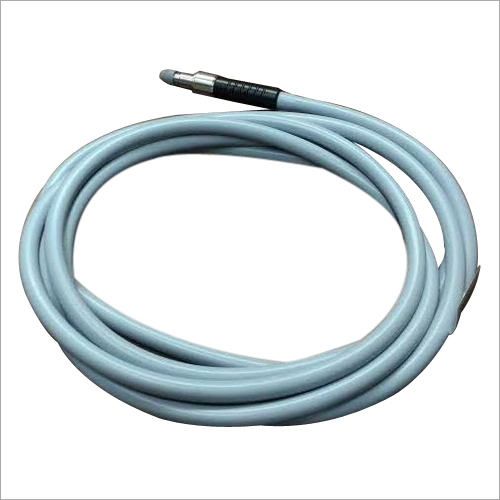
Tell us about your requirement

Price:
Quantity
Select Unit
- 50
- 100
- 200
- 250
- 500
- 1000+
Additional detail
Mobile number
Email

More Products in Fibre Optic Cable Category
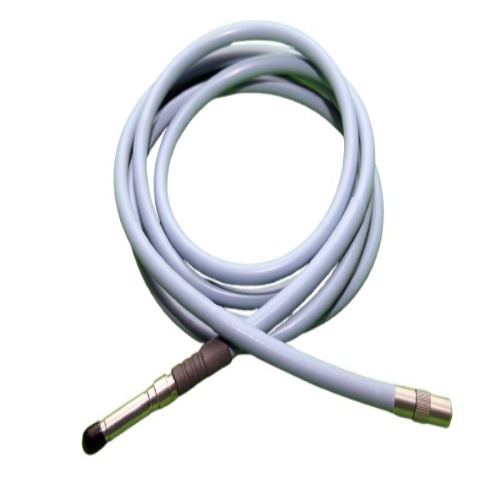
ENT Fiber Optic Cable
Price 8500.0 INR / Piece
Minimum Order Quantity : 1 Piece
Technology : Silicon
Product Type : ENT Fiber Optic Cable
Condition : New
Application : Medical Use


- ALLIED MEDITEK
GST : 19ACBFA0772E1ZP - 31/A, Ashutosh Shastri Road, (P/55A), C.I.T. Road,Kolkata - 700010, West Bengal, India
- Mr Asit Chaturvedi (Partner)
- Mobile :08045816118
- Send Inquiry
- Phone :08045816118
 Send Inquiry
 |
ALLIED MEDITEK
All Rights Reserved.(Terms of Use) Developed and Managed by Infocom Network Private Limited. |
